Blog
Sweet success: What can we learn from the Soft Drinks Industry Levy?
10 years on from the announcement of the Soft Drinks Industry Levy, Zoe Rostas from the British Heart Foundation reflects in this guest blog on what it has achieved, and what we can learn from it as the UK Government looks to deliver on its ‘moonshot to end the obesity epidemic’.
Today marks 10 years since the UK Government announced plans for a Soft Drinks Industry Levy (SDIL) – a mandatory tax on sugar in soft drinks for manufacturers (also known as the sugar tax).
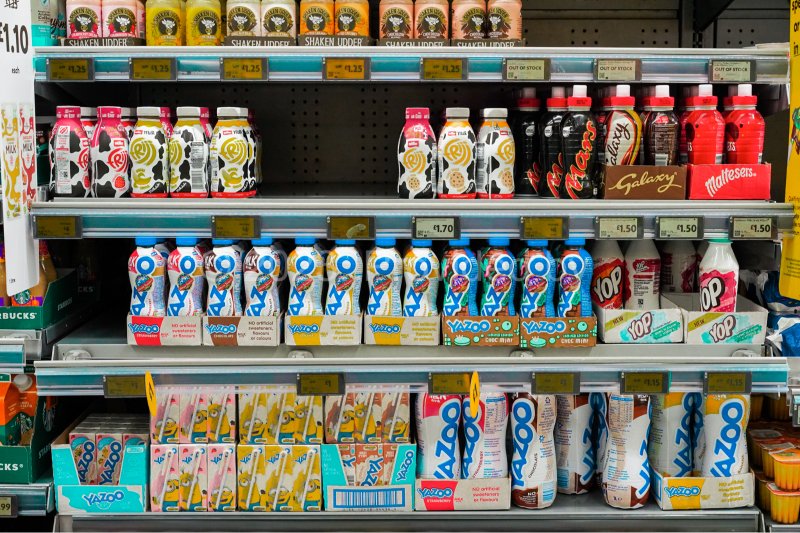
Implemented in 2018 against a backdrop of growing childhood obesity, the primary aim of the levy was to reduce sugar consumed via soft drinks, whilst also raising revenue to fund programmes aimed at improving children’s health. From 2028, some sugary milk-based drinks will also be covered by the levy, having originally been exempt.
Too much sugar can lead to excess weight and obesity, which are key risk factors for having a heart attack or stroke.
As a significant proportion of sugar consumed in the UK came from soft drinks, British Heart Foundation, a member of the Recipe for Change coalition, was a strong advocate for the SDIL when it was first introduced and has since been calling for further measures that build upon its success.
A sweet success
The world around us makes it incredibly difficult for individuals to maintain a healthy diet. In the UK, unhealthy food and drink are cheaper, more readily available and heavily marketed, compared to healthier alternatives. Policies which shift responsibility onto companies to make products healthier are critical to support healthier diets.
Whilst no single measure can solve such a large and complex problem, the Levy has given us much to celebrate. Successes include:
- Healthier products: The Levy incentivised manufacturers to reduce sugar content in soft drinks by an average of 47%. By contrast, the voluntary sugar reduction programme, which applies to certain food products and carried no financial penalties for inaction, achieved a reduction of just 3.5%.
- Healthier people: Evidence suggests that the Levy removed substantial sugar from people’s diets across the UK and resulted in various health gains, including preventing thousands of cases of obesity among girls aged 10-11 and fewer tooth extractions in children. Research predicts that the SDIL will also lead to long-term improvements in life expectancy and reduced cases of cardiovascular disease (CVD). The greatest improvements in life expectancy are predicted for children and adolescents in more deprived areas, where obesity prevalence and diet-related ill health are highest, demonstrating the Levy’s impact on health inequalities.
- Healthier revenue: The Levy has raised over £2.2bn for the UK Exchequer since 2018. This revenue was used to establish the National School Breakfast Club and helped fund better provision of physical activity in schools.
Key to the Levy’s success is that it is mandatory, doesn't place the onus on individuals to make healthier choices, and uses financial incentives to drive change. Crucially, the Levy benefitted from strong cross-party support.
What’s next for obesity prevention?
Despite this progress, the UK has stubbornly high rates of obesity, with 64% of adults and 27% of children living above a healthy weight, and 1 in 9 cardiovascular deaths associated with excess weight and obesity. Obesity-related costs to the UK economy are high and forecast to grow over the next decade.
To address the UK’s obesity challenge and help prevent more people from developing CVD, the UK Government must build on the Levy’s success and deliver on its commitment to improve access to healthy food across the UK.
The current Government’s flagship policy to help address obesity is the Healthy Food Standard, announced in the 10-Year Health Plan for England last year. This will introduce mandatory reporting and healthy sales targets for large food businesses, including supermarkets, to encourage the sale of healthier food and drink across the population.
Is the Government learning from the success of the Soft Drinks Industry Levy?
It would seem so. The Healthy Food Standard will place responsibility on food companies to make products healthier, rather than putting the onus on individuals to change their behaviour, and will be mandatory, with penalties for non-compliance.
It also has the potential to help people put more fruit and vegetables in their shopping basket, if designed to push retailers to make these items more attractive, available, and affordable to shoppers.
This policy could be hugely impactful if it is implemented in full and quickly, with ambitious targets across all types of food businesses.
Nesta estimates that the policy could lead to a reduction in obesity prevalence by around 20% based on supermarket sales alone. But this will require bravery from the Government, to ensure that it is not weakened or delayed by industry pressure, as we have seen with previous policies, like the Public Health Responsibility Deal – a voluntary, industry-led initiative, where food companies set their own targets.
However, as with the SDIL, a single policy cannot meet the scale of the challenge alone, even if it’s an ambitious one like the Healthy Food Standard.
Obesity prevalence remains stubbornly high, health disparities and cardiovascular disease inequalities are widening, economic inactivity is rising, and pressure on the NHS is immense; the need for decisive, ambitious preventative action is undeniable.
To meet the Government’s ambition to end the ‘obesity epidemic’, a more comprehensive response is required. Alongside the Healthy Food Standard, the UK Government should explore complementary financial incentives that encourage companies to make their products healthier, such as a broader levy on unhealthy food, and end unhealthy food advertising in all forms, including outdoor advertising. This is a moment for the Government to show strong leadership through bold decisions.
A version of this blog was originally posted on the British Heart Foundation website.





Zoe has been a Policy Officer at British Heart Foundation (BHF) since May 2025. She works as part of BHF’s Prevention team, driving forward policy work on obesity, to improve access to healthier diets across the UK population.
Zoe Rostas
Prevention Policy Officer, British Heart Foundation
Published 16 Mar 2026